
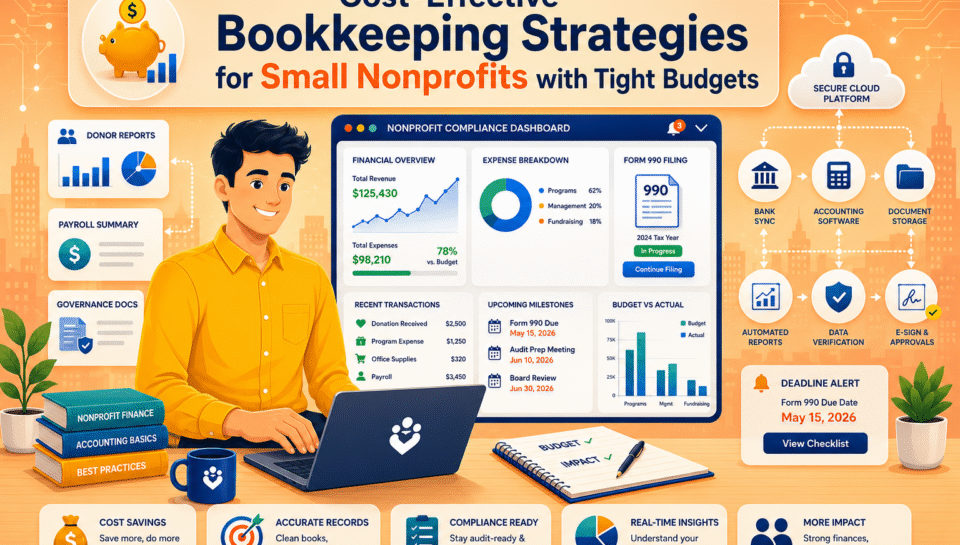

Running a small nonprofit often means making every dollar count. Donations, grants, and fundraising income must support programs, outreach, and daily operations. Financial records cannot become an afterthought, even when budgets are limited. Strong bookkeeping supports grant reporting, board oversight, tax filing, and donor confidence while helping nonprofit leaders make informed financial decisions.
Many organizations assume they need a large finance department to keep their books in order. That is rarely the case. Small nonprofits can build dependable financial processes without stretching their budgets. The goal is not to spend more on accounting. The goal is to spend wisely while maintaining accurate records and meeting reporting requirements.
This guide covers practical bookkeeping strategies that reduce costs without sacrificing financial accuracy. It also explains when professional nonprofit bookkeeping services become the smarter financial choice.
Build a Bookkeeping Process Before Problems Begin
Many nonprofits wait until tax season or an audit request before organizing their financial records. By then, missing receipts, incomplete reports, and account errors often create extra work and extra expenses.
A simple bookkeeping process should cover:
- Recording income every week
- Tracking expenses by program
- Reconciling bank accounts each month
- Keeping digital copies of receipts
- Reviewing financial reports regularly
- Monitoring restricted and unrestricted funds separately
Small tasks completed consistently take far less time than correcting months of neglected records.
Choose Accounting Software That Matches Your Organization
Buying expensive accounting software does not guarantee better financial records.
Instead, look for software that supports nonprofit accounting needs such as:
- Fund tracking
- Grant reporting
- Budget comparisons
- Donation management
- Financial statement generation
- User access controls
Many cloud-based accounting platforms also reduce technology costs because updates, backups, and security are handled automatically.
Selecting software that fits your organization prevents unnecessary monthly expenses while making bookkeeping easier for staff and volunteers.
Separate Restricted and Unrestricted Funds
One of the biggest bookkeeping mistakes in nonprofits involves mixing different funding sources.
Grant money often comes with spending restrictions. Donations may also include donor instructions regarding how funds should be used.
Keeping these funds separate helps organizations:
- Track grant spending accurately
- Prepare financial reports faster
- Avoid compliance issues
- Show donors how contributions were used
This practice also simplifies year-end reporting and reduces time spent correcting accounting records.
Many organizations rely on nonprofit fund accounting services when managing several grants or restricted funding sources because accurate fund tracking requires specialized knowledge.
Reconcile Bank Accounts Every Month
Monthly reconciliation remains one of the least expensive ways to prevent accounting problems.
Waiting until year-end often allows small errors to grow into larger financial issues.
Monthly reconciliation helps identify:
- Duplicate transactions
- Missing deposits
- Bank errors
- Unauthorized payments
- Recording mistakes
Finding these issues early keeps financial reports accurate throughout the year instead of creating large cleanup projects before audits or tax filing deadlines.
Create a Digital Document Storage System
Paper records consume office space and become difficult to locate over time.
Digital document management saves both time and money.
Store copies of:
- Donation receipts
- Vendor invoices
- Payroll records
- Grant agreements
- Bank statements
- Board-approved budgets
- Financial reports
Organize folders by year and document type. Naming files consistently allows staff members to locate information quickly whenever questions arise.
Cloud storage also protects financial documents from accidental loss.
Assign Financial Responsibilities Clearly
Bookkeeping mistakes often happen because nobody knows who handles specific financial tasks.
Even small nonprofits should divide responsibilities whenever possible.
Examples include:
- One person records transactions.
- Another approves payments.
- A board member reviews monthly financial reports.
- Executive leadership approves major expenses.
This structure reduces errors while creating accountability throughout the organization.
Even organizations with very small teams can introduce simple review procedures without increasing operating costs.
Review Financial Reports Every Month
Bookkeeping should support decision-making throughout the year rather than producing reports only during tax season.
Monthly reports help leadership understand:
- Available cash
- Program spending
- Budget performance
- Grant balances
- Outstanding bills
- Donation trends
Regular reviews allow nonprofits to adjust spending before financial challenges become larger problems.
Board members also benefit from receiving consistent financial updates because stronger oversight supports better organizational planning.
Avoid Payroll Errors Before They Become Costly
Payroll mistakes create more than employee frustration. They can also result in tax penalties and reporting issues.
Small nonprofits should maintain accurate records for:
- Employee wages
- Contractor payments
- Payroll taxes
- Benefits
- Paid leave
- Retirement contributions
Organizations managing payroll internally should establish written procedures and review payroll reports carefully before processing payments.
As staffing grows, many nonprofits choose nonprofit payroll services to reduce administrative work while improving payroll accuracy.
Prepare for Form 990 Throughout the Year
Many nonprofits treat Form 990 as a year-end project.
The organizations that experience fewer filing challenges prepare throughout the year instead.
Maintain organized records for:
- Board meetings
- Program expenses
- Donations
- Executive compensation
- Governance policies
- Fundraising activities
When financial records remain organized, form 990 preparation services require far less cleanup before filing deadlines.
Preparing continuously also reduces stress during tax season and helps nonprofits avoid missing required information.
Use Volunteers Carefully
Volunteers contribute tremendous value to nonprofit organizations. Still, bookkeeping demands consistency and financial knowledge.
Routine administrative work may fit volunteer support, including:
- Filing documents
- Scanning receipts
- Organizing invoices
- Preparing basic reports
Tasks involving financial reporting, fund accounting, payroll, or tax filings should receive oversight from experienced accounting professionals.
Balancing volunteer support with professional review helps organizations control costs while protecting financial accuracy.
Build an Annual Budget You Can Follow
Budgets should guide daily financial decisions instead of becoming documents that sit untouched after board approval.
A practical nonprofit budget should include:
- Expected donations
- Grant income
- Program costs
- Administrative expenses
- Fundraising expenses
- Emergency reserves
Compare actual spending against the budget every month.
Small adjustments made throughout the year often prevent larger financial problems later.
Track Every Grant Separately
Grant funding usually includes reporting deadlines, approved spending categories, and documentation requirements.
Combining multiple grants into general operating expenses makes reporting difficult.
Separate tracking allows nonprofits to:
- Monitor remaining grant balances
- Prepare grant reports quickly
- Document allowable expenses
- Reduce reporting mistakes
Organizations managing several active grants often benefit from professional nonprofit accounting services because multiple funding sources increase bookkeeping demands.
Reduce Manual Data Entry
Manual bookkeeping consumes valuable staff time.
Whenever possible, automate routine financial activities such as:
- Bank transaction imports
- Invoice creation
- Recurring payments
- Donation recording
- Expense categorization
- Financial report generation
Automation reduces repetitive work while lowering the chance of data entry errors.
Staff members can spend more time supporting programs instead of entering financial information repeatedly.
Monitor Cash Flow Instead of Bank Balance Alone
A healthy bank balance does not always reflect a healthy financial position.
Future obligations may already exceed available unrestricted cash.
Monthly cash flow reviews should include:
- Expected donations
- Upcoming payroll
- Grant reimbursement timing
- Vendor payments
- Program expenses
Understanding future cash needs allows nonprofit leaders to plan ahead rather than reacting after funds become limited.
Schedule Internal Financial Reviews
An external audit may not be required for every small nonprofit.
Internal financial reviews still provide value.
Quarterly reviews help identify:
- Coding errors
- Missing documentation
- Budget variances
- Duplicate expenses
- Unusual transactions
Routine reviews reduce cleanup work before annual reporting while strengthening financial oversight.
Know When Outsourcing Saves Money
Hiring a full-time accounting department may not fit a small nonprofit’s budget.
Outsourcing specific accounting functions often provides a lower-cost alternative.
Professional nonprofit bookkeeping services can support:
- Monthly bookkeeping
- Bank reconciliations
- Financial reporting
- Grant tracking
- Budget monitoring
- Year-end preparation
Organizations receive experienced financial support without paying full-time salaries, employee benefits, or ongoing training costs.
Select a Provider That Understands Nonprofit Accounting
Nonprofit accounting differs from business accounting in several ways.
Before choosing an accounting partner, evaluate whether they understand:
- Fund accounting
- Grant compliance
- Restricted donations
- Board reporting
- Form 990 filing
- Nonprofit payroll requirements
Working with professionals familiar with nonprofit financial reporting reduces corrections and improves reporting accuracy throughout the year.
Companies such as Non- Profit Books focus on nonprofit financial management, helping organizations maintain organized records while supporting bookkeeping, payroll, reporting, fund accounting, and tax preparation needs.
Common Bookkeeping Mistakes Small Nonprofits Should Avoid
Many bookkeeping problems begin with small habits that continue for months.
Watch for these common mistakes:
- Mixing personal and nonprofit expenses
- Delaying monthly reconciliations
- Missing supporting documents
- Recording donations incorrectly
- Ignoring restricted fund tracking
- Waiting until tax season to organize records
- Skipping financial report reviews
- Poor payroll documentation
Avoiding these issues saves time, reduces correction costs, and supports stronger financial reporting.
Final Thoughts
Limited budgets do not prevent small nonprofits from maintaining dependable financial records. Consistent bookkeeping, organized documentation, monthly financial reviews, and thoughtful planning reduce unnecessary expenses while supporting long-term stability.
As organizations grow, bookkeeping demands also increase. Grant reporting, payroll management, fund accounting, and annual tax filings require additional attention. Working with experienced nonprofit bookkeeping services allows nonprofit leaders to spend more time serving their communities instead of managing financial paperwork.
Whether your organization needs help with bookkeeping for nonprofits, nonprofit fund accounting services, nonprofit payroll services, form 990 preparation services, or broader nonprofit accounting services, choosing experienced support can reduce administrative costs while helping your nonprofit stay financially organized year after year.
When financial records remain accurate and current, nonprofit leaders can focus on advancing their mission with greater confidence.